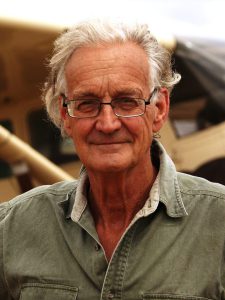
Iain Douglas-Hamilton, one of the world’s most influential elephant conservationists, has died at age 83. More than a zoologist, he was the first to show the world that elephants think, feel, grieve, and choose — transforming global understanding of these remarkable animals. Douglas-Hamilton passed away Monday at his home in Nairobi. Tributes quickly followed. Prince William praised him as “a man who dedicated his life to conservation,” while Tusk founder Charles Mayhew said, “The world has lost a true conservation legend, but his legacy will continue.”
Born in Dorset in 1942, Douglas-Hamilton studied biology in Scotland and at Oxford before moving to Tanzania at 23. At Lake Manyara National Park, he began identifying individual elephants by their ears, wrinkles, and personalities — a groundbreaking approach that became the basis of modern elephant research.
His work soon exposed a darker reality: a continent-wide poaching crisis. Through dangerous fieldwork and later aerial surveys, he revealed the devastating scale of elephant slaughter, helping push forward the 1989 global ivory trade ban. Jane Goodall said he proved that elephants “are capable of feeling just like humans.”
In 1993, he founded Save the Elephants, pioneering early GPS tracking and advocating internationally for stronger ivory restrictions. His efforts influenced global agreements, including major 2015 commitments by the U.S. and China.Douglas-Hamilton is survived by his wife, Oria, two daughters, and six grandchildren. His greatest legacy lives on in the elephants whose survival his life’s work helped secure.